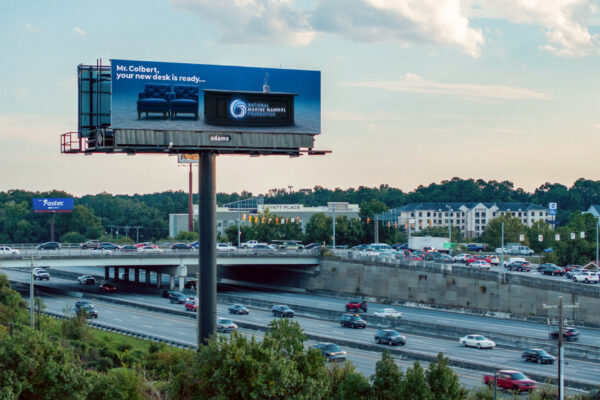
How Bank of Ann Arbor Used Localized Billboard Creative to Win Big
Out-of-home advertising works best when it feels like it belongs. When your audience feels like your messaging has been tailored specifically to them and their…
Read More
Adams Outdoor Advertising delivers unmatched out-of-home solutions across 18 dynamic markets, with a growing footprint and over 10,000 high-visibility displays. We don’t just operate in our markets — we own them, with deep local relationships, exclusive inventory, and dominant coverage that gives your brand a commanding presence.
From urban centers to high-traffic corridors, our strategically placed assets reach millions of consumers where they live, work, and move — every day. Backed by market expertise and a commitment to creative excellence, Adams is your partner in scaling campaigns with authentic local impact and national reach.
We’re not just growing. We’re building the future of out-of-home.

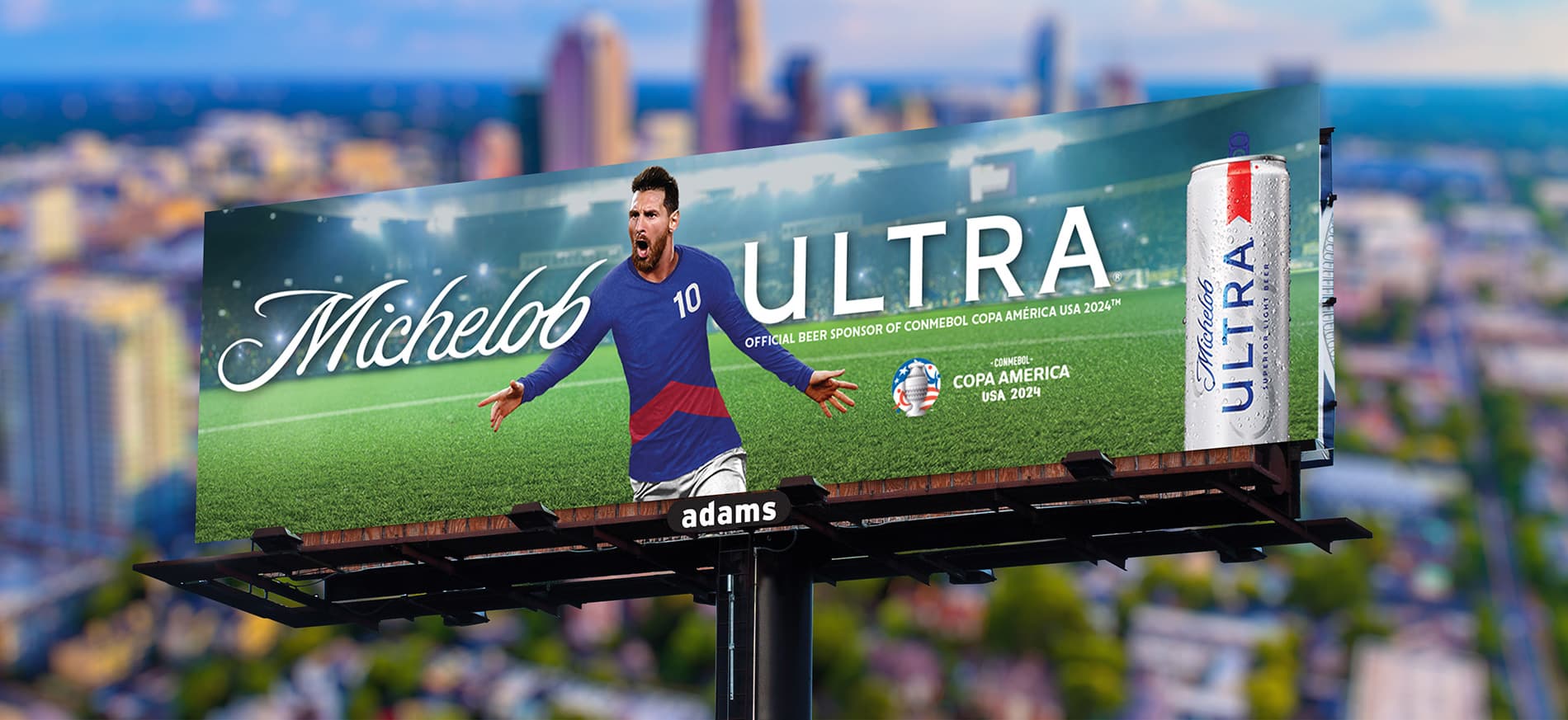
A static billboard is a large-format outdoor advertisement that displays a single printed message continuously for the duration of a campaign.
Unlike digital billboards that rotate ads, static boards remain fixed, providing exclusive visibility 24/7. They’re printed on vinyl or other durable materials and often illuminated for nighttime visibility. According to OAAA, traditional static billboards account for roughly three-quarters of all U.S. out-of-home ad revenue, proving their enduring effectiveness in brand-building and local reach.
A static billboard ad visually combines bold imagery, short copy, and clear branding designed for quick comprehension at high speeds.
Typical dimensions are 14′ x 48′ for bulletins and 10’6″ x 22’8″ for posters, printed with weather-resistant materials and often lit for 24-hour visibility. Many brands enhance their creative with 3D extensions, lighting effects, or sculpted elements to make the design pop. The result is a clean, high-impact message that can’t be scrolled past or muted.
A static billboard’s cost depends on location, size, and market demand, but prices typically range from $1,000 to $4,000 per four-week period in mid-sized markets according to Business.com, and higher in major metros.
Adams Outdoor customizes campaigns based on your audience reach goals, duration, and geography to maximize cost-efficiency and impact.
Static billboards are one of the most effective and reliable tools in modern advertising. According to OAAA, among all major media types, adults express the strongest favorability towards billboards (61%). Their bold, large-format presence guarantees constant visibility, capturing attention day and night while reinforcing your message through repeated impressions.
Beyond their size and reach, static billboards give brands the opportunity to think outside the box — with creative executions like extensions, 3D elements, special effects, and lighting options that truly make campaigns stand out.
With unmatched cost-effectiveness, long-term staying power, and the ability to deliver a simple, impactful message, static billboards remain a cornerstone of successful marketing strategies. Ready to make your brand unmissable? Put your message on a billboard today and own the landscape.
Digital billboard advertising uses LED technology to display high-resolution images or animations that can rotate multiple ads on a single structure.
These screens, managed remotely, allow advertisers to update content instantly. Digital billboards enable daypart targeting, dynamic messaging, and even real-time data triggers (like weather or traffic).
Digital billboards are legal in most U.S. states, though local zoning and brightness regulations vary. The Federal Highway Administration permits digital billboards under its “Standards for Changeable Message Signs”, provided they don’t flash or distract drivers. Adams Outdoor operates fully compliant displays across all its markets, meeting state DOT and municipal standards for safety, light intensity, and spacing.
A digital billboard campaign cost varies by market and frequency, with typical rates between $1,500 to $6,000 per four-week cycle in midsized markets, according to Business.com.
Factors include screen location, dwell time, and share-of-voice (the percentage of time your ad appears).
Digital billboards bring flexibility, impact, and innovation to out-of-home advertising. Their ability to deliver timely, visually compelling messages to broad audiences makes them a powerful tool in any marketing mix. The dynamic nature of digital billboards has unmatched versatility and engagement.
The two main types of billboards are static and digital. Static billboards feature fixed vinyl displays ideal for long-term branding, while digital billboards use LED screens that can rotate multiple ads dynamically. Many successful campaigns blend both — using static for consistent brand presence and digital for flexible, time-sensitive messaging.
Adams Outdoor Advertising is a leading out-of-home media company specializing in static and digital billboard placements across multiple U.S. markets. For decades, Adams has helped local and national brands reach audiences where they live, work, and travel. Known for creative innovation and data-informed strategy, Adams Outdoor connects advertisers with real-world visibility and measurable results.
Outdoor media owners with available inventory can be found through OOH media companies like Adams Outdoor, which maintain searchable databases of available billboard locations by city and demographic reach.
Adams provides clients with custom location planning tools and audience analytics to match each board’s visibility with your target audience and budget.
Outdoor advertising, also known as out-of-home (OOH) advertising, refers to media placements that reach consumers while they’re on the go — including billboards, transit posters, and digital screens.
Adams Outdoor Advertising is one of the best companies for placing billboards due to its extensive local expertise, creative design capabilities, and strategic planning support. Adams combines audience insights, location data, and creative execution to ensure campaigns are both memorable and measurable.
A billboard ad should run for a minimum of four weeks to achieve strong message recall, though many advertisers extend campaigns for several months to maintain consistent awareness. Longer runs ensure sustained visibility and deeper audience imprinting, and give you the opportunity to lock in locations long term as either a strategy market move or competitive advantage geographically.
Adams Outdoor National